How to Read an Auto Repair Estimate, Line by Line
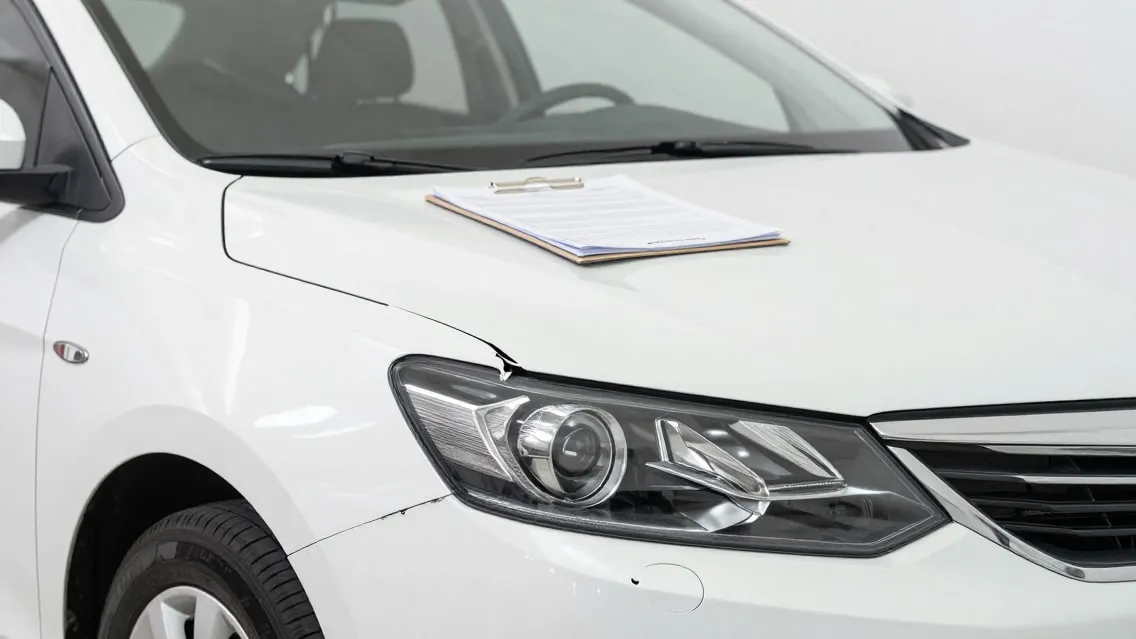
Read an auto repair estimate from the header down to the totals: the average claim in CCC's data carried 27.4 hours (Repairer Driven News, H1 2024) of labor, and each of those hours sits on its own coded line. Check each line's operation code (R&I, R&R, Rpr, Refn, Blnd), the part type, hours by labor category, paint and materials, sublet work and the totals.
A body shop estimate is a list of operations, not a single price. Each line names a part, an operation code and the hours assigned to it. R&I means a part comes off and goes back on; R&R means it's replaced; Rpr means it's repaired in place; Refn is painting time; Blnd is color matching into a neighboring panel. Hours are split into body, refinish, frame and mechanical labor, each billed at its own rate. Many shops bill paint and materials per refinish hour; among shops using that multiplier, a 2025 survey put the national average at $50 per refinish hour (Repairer Driven News, 2025 survey). Others bill from a paint invoice or a materials calculator. Part codes tell you whether a part is new from the carmaker (OEM), aftermarket (A/M), used or reconditioned; in California the estimate must say which. Totals at the bottom add parts, labor, materials, sublet work and tax. The first estimate often grows later: once the car is taken apart, hidden damage is written up as a supplement. Circle anything you don't understand and ask the shop to explain it before you sign.
Ranges with a dotted underline are published ranges wider than the 1.5x we aim for. The sources don't break them down further, so we show them exactly as published. How we handle ranges.
Read the estimate in six steps, from header to total
You read a body shop estimate in the same order it's printed, and the labor lines deserve close attention: CCC found labor was 34.8 % (Repairer Driven News, Q1 2024) of repair costs for non-EVs three years old or newer in the first quarter of 2024. Printouts differ by estimating system, but many group the lines this way.
What you need: the full printout with every page and any supplements, your car's VIN and paint code (on the driver's door jamb label), and a second shop's estimate if you have one.
- Check the header. Confirm the VIN, year, make, model, trim, paint code and mileage. A wrong trim can change part numbers and prices.
- Read the point of impact and damage notes. These describe where the car was hit and what the estimator saw.
- Go line by line. Each line shows an operation code, a part name, a part type, a part price and labor hours.
- Sort the hours by labor type. Body, refinish, frame and mechanical hours are listed separately and billed at different rates.
- Read the add-on lines. Paint and materials, sublet work (glass, alignment, calibration), scans and hazardous waste fees sit near the bottom.
- Check the totals block. Parts, labor by type, materials, sublet, tax, then any deductible and insurer payment.
Circle every line you can't explain. Those circles become your questions for the shop.
What each line code on a body shop estimate means
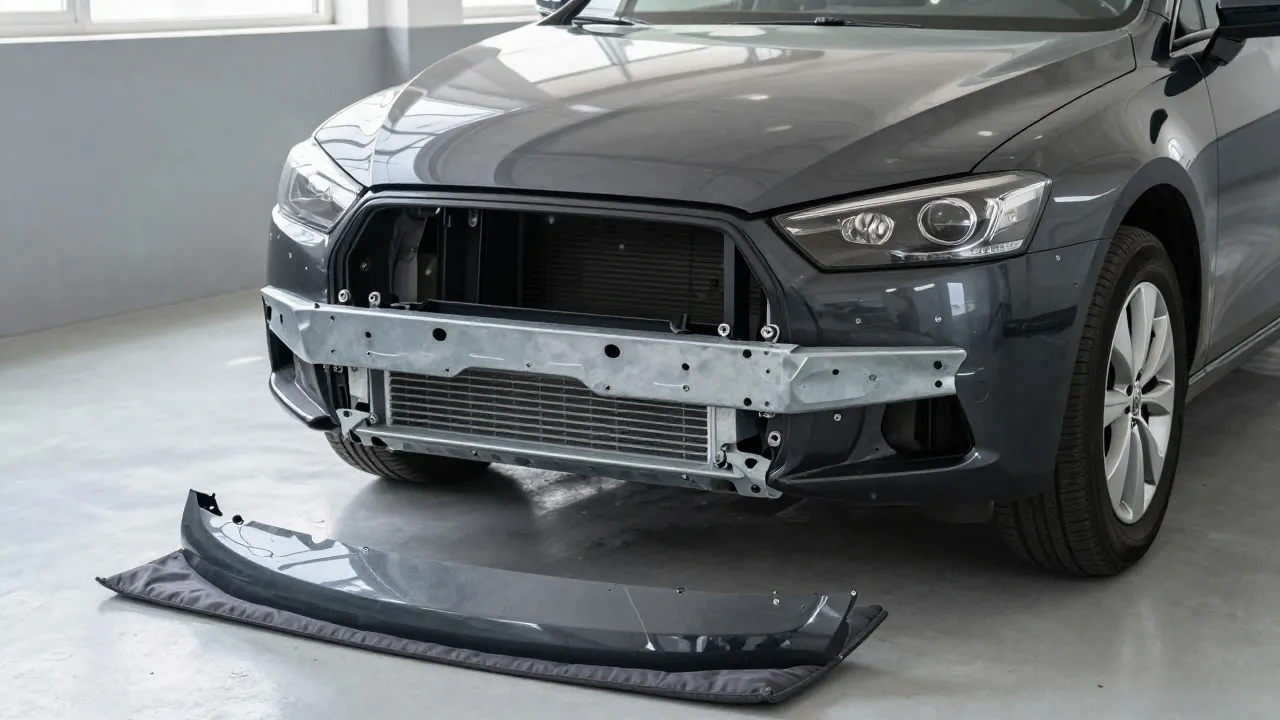
Each line code on a body shop estimate tells you what the shop will do with that part, and several of them map to published labor rules such as a blend at 50 % of base refinish time (MOTOR/CCC guide (archived), Rev 11-22) in the MOTOR guide. Estimating systems use slightly different labels, but the codes below are common across them.
| Code on the estimate | What it means | Published rule or reference |
|---|---|---|
| R&I | Remove and install: the same part comes off for access and goes back on | Labor only, no part price |
| R&R | Remove and replace: a new or used part goes on | Part price plus labor |
| Rpr | Repair the existing panel (dents, cracks) | Body hours set by the estimator |
| Refn | Refinish: prep and paint a panel | Clear coat adds 40 % of base refinish time (MOTOR/CCC guide (archived), Rev 11-22) on the first major panel |
| Add'l clear coat | Clear coat on each further panel | 20 % of base refinish time (MOTOR/CCC guide (archived), Rev 11-22) per additional panel |
| Blnd | Blend color into an adjacent, undamaged panel | 50 % of base refinish time (MOTOR/CCC guide (archived), Rev 11-22) |
| Overlap | Deduction for shared prep between panels | -0.4 hours per panel (MOTOR/CCC guide (archived), Rev 11-22) for adjacent panels |
| Incl. | Operation already included in another line | Not billed again |
| Sublet | Work sent to an outside vendor (glass, alignment, calibration) | Billed at the vendor's price |
For Rpr lines on dented panels, our dent repair cost guide explains when a panel is pulled without paint, repaired with filler or replaced.
Some lines are entered by hand because not every repair is in the estimating database. Asking what a hand-entered line covers is reasonable and doesn't accuse anyone of anything.
Body hours vs. refinish hours: how labor is split
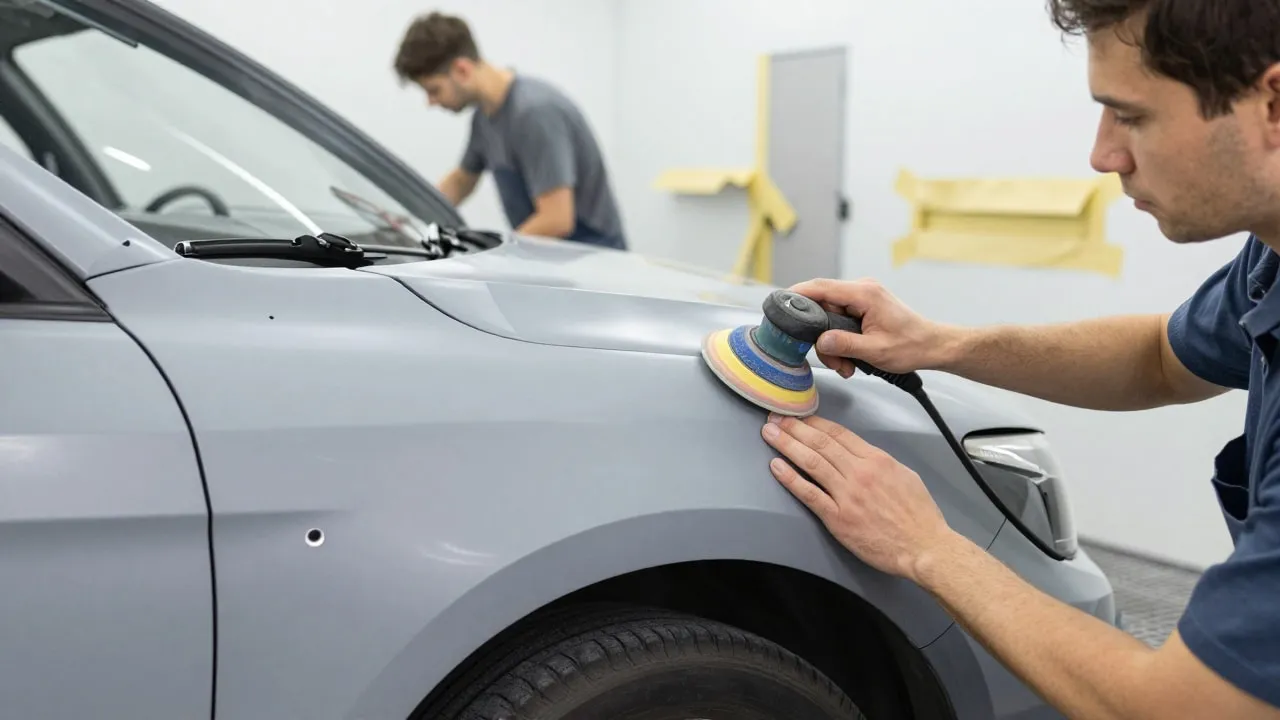
Body hours and refinish hours are separate labor categories on the estimate, and they add up fast: the average claim in CCC's data carried 27.4 hours (Repairer Driven News, H1 2024) of labor per claim. Each category is multiplied by its own hourly rate, so where an hour lands matters as much as how many there are.
Body labor covers removing, repairing and fitting panels. Refinish labor covers sanding, priming, painting and clear coat. Frame labor is for straightening the structure on a bench, and mechanical labor covers items like suspension, cooling or wiring. A Massachusetts survey of shops found an average body labor rate of $68/h (Repairer Driven News, 2025-26 survey) and an average mechanical rate of $108/h (Repairer Driven News, 2025-26 survey). Those are Massachusetts figures; labor rates vary by state and by shop.
Check that each line puts its hours in the right column. Refinish time billed as body time changes the total. So does body work billed at the mechanical rate. If you're comparing two estimates, compare hours per category, not just the bottom line.
How paint and materials, clear coat and blend lines add up
Many shops bill paint and materials per refinish hour, and among shops using that multiplier method, a 2025 survey put the national average at $50 per refinish hour (Repairer Driven News, 2025 survey). Other shops bill from a paint-scale invoice or a materials calculator, so ask which method your estimate uses; with a multiplier, every added hour of painting time also raises the materials line.
The MOTOR guide lists clear coat as its own add-on: 40 % of base refinish time (MOTOR/CCC guide (archived), Rev 11-22) on the first major panel and 20 % of base refinish time (MOTOR/CCC guide (archived), Rev 11-22) on each additional panel. Blending a neighboring panel, so the new paint doesn't look different from the old, is allowed at 50 % of base refinish time (MOTOR/CCC guide (archived), Rev 11-22) instead of a full refinish.
When two or more panels are painted together, some prep is shared, so the guide takes an overlap deduction of -0.4 hours per panel (MOTOR/CCC guide (archived), Rev 11-22) for each adjacent major panel and -0.2 hours per panel (MOTOR/CCC guide (archived), Rev 11-22) for each panel that isn't adjacent. On a multi-panel paint job, look for that negative line. If it's missing, ask whether overlap was applied.
OEM, A/M, used and LKQ: what the part codes tell you
The part code on each estimate line tells you who made the part, and the price gap can be large: one parts retailer, PartCatalog (parts retailer estimate, Mar 2026), lists a new OEM bumper cover at $300–$600 and an aftermarket cover at $120–$350.
- OEM is a new part from the carmaker.
- A/M (aftermarket) is a new part from another manufacturer.
- Used, often shown as LKQ ("like kind and quality") or recycled, comes from a salvage vehicle.
- Reman or Recond is a rebuilt or reconditioned part.
California is strict here. Its Auto Body Repair Consumer Bill of Rights says the estimate and invoice must identify every part as new, used, aftermarket, reconditioned or rebuilt. If a line shows only a vague label, ask the shop to write the plain part type next to it. Other states set their own rules, so check your policy and your state's insurance department if the part type matters to you.
Scans, calibrations and supplements: why the final bill can grow
Scan and calibration lines now show up on many estimates, and CCC found calibrations on 23 % (Repairer Driven News, 2025) of repairable estimates in 2025. They cover checking the car's computers before and after the repair and re-aiming cameras or radar near the damage. Ask which system is being calibrated and for the printed report.
A supplement is a second, added estimate written after the car is taken apart. First estimates are often written from what's visible outside, so damage behind a bumper cover or fender can only be added once the panel is off. Our bumper repair cost guide breaks down the repair and replacement lines a bumper job can include. Supplements are often numbered (S01, S02) and list only the new lines.
AAA advises that a written estimate state that the price won't go over a set amount or percentage without your approval. Ask for that line before work starts, so a supplement comes to you first.
Common mistakes when reading a repair estimate
A common misreading of a repair estimate is comparing totals instead of lines: one estimate may take the MOTOR guide's overlap deduction of -0.4 hours per panel (MOTOR/CCC guide (archived), Rev 11-22) per adjacent panel while another leaves it out. Two shops can reach a similar total with very different hours, part types and add-ons, so the total alone won't tell you which plan is better.
- Comparing totals only. Compare body, refinish and frame hours, part types and sublet lines side by side.
- Ignoring the part type. An OEM line and an A/M line for the same part aren't the same repair.
- Treating R&I as a duplicate charge. Removing a part for access is real labor, unless the line says it's included elsewhere.
- Assuming the estimate is final. Hidden damage can add a supplement after teardown.
- Skipping the header. A wrong trim or paint code can mean wrong parts.
To check your result, read each circled line back to the shop and write their answer next to it. When every line has an explanation, you understand the estimate. For a fairness check against reference figures, use our body shop quote check, and see how we build our estimates for where the reference figures come from.
Check a shop estimate with the Car Repair Cost app
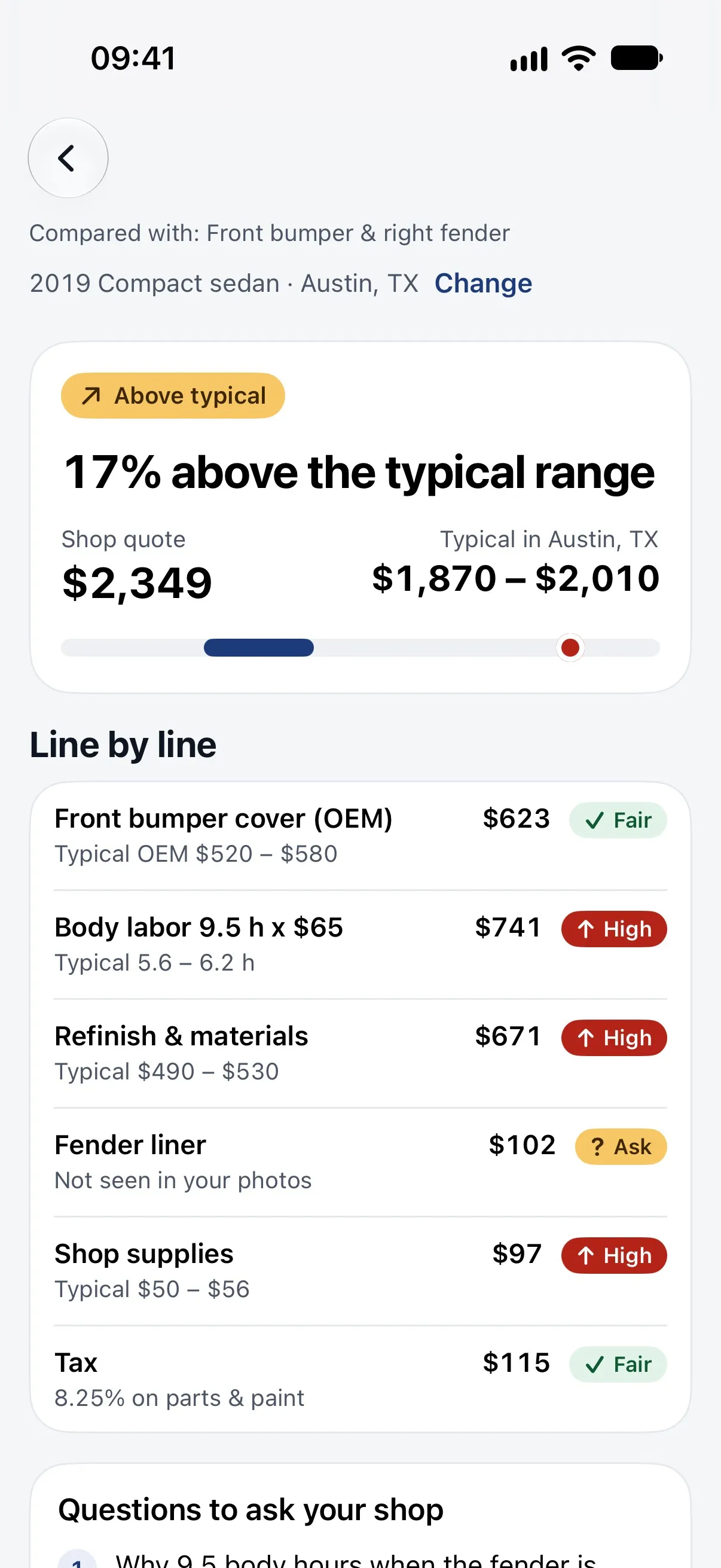
The Car Repair Cost team built the Car Repair Cost app to check estimates like this one. Scan the shop's estimate, pick a photo or import a PDF, and the lines are read on your phone; you can correct any line that was read wrong. Each line is then marked fair, high or worth asking about, with questions to bring back to the shop.
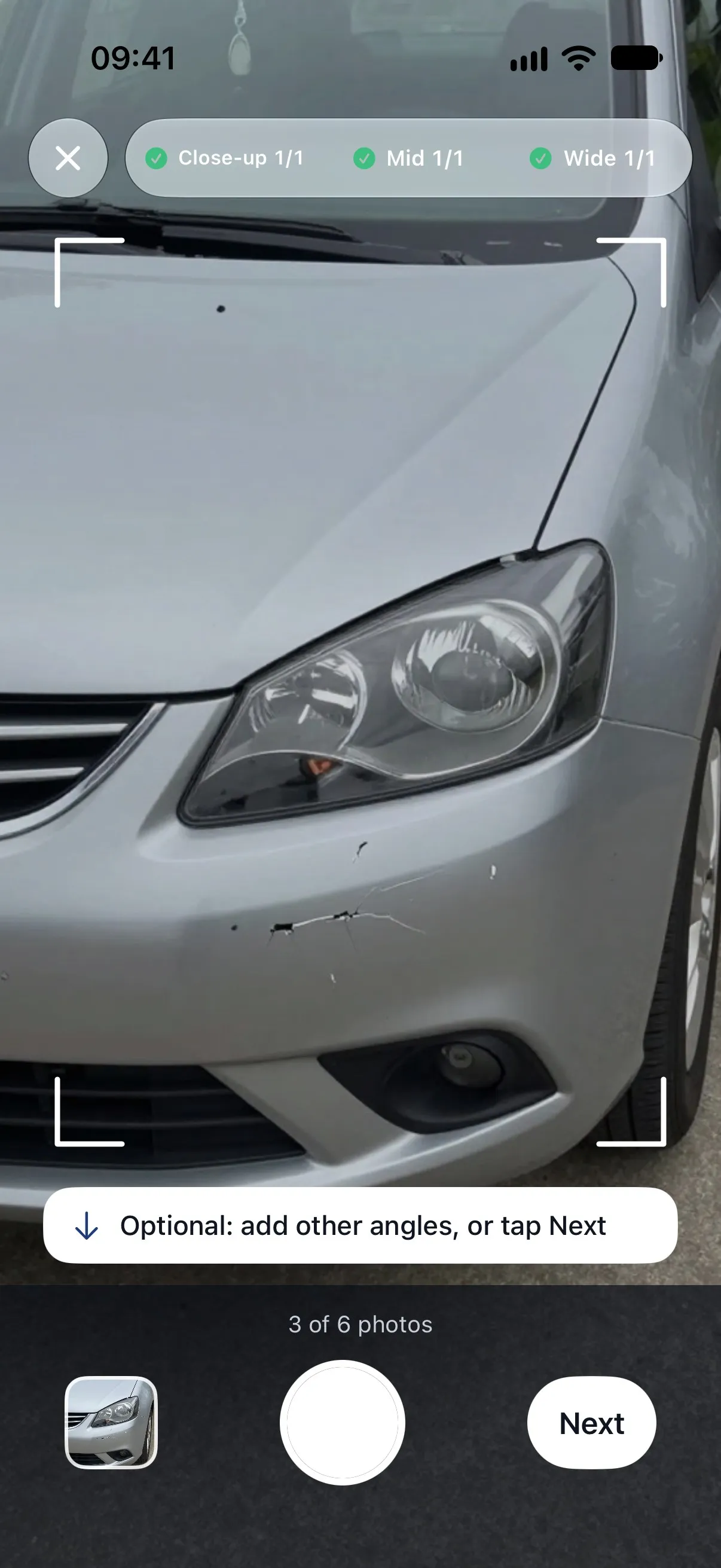
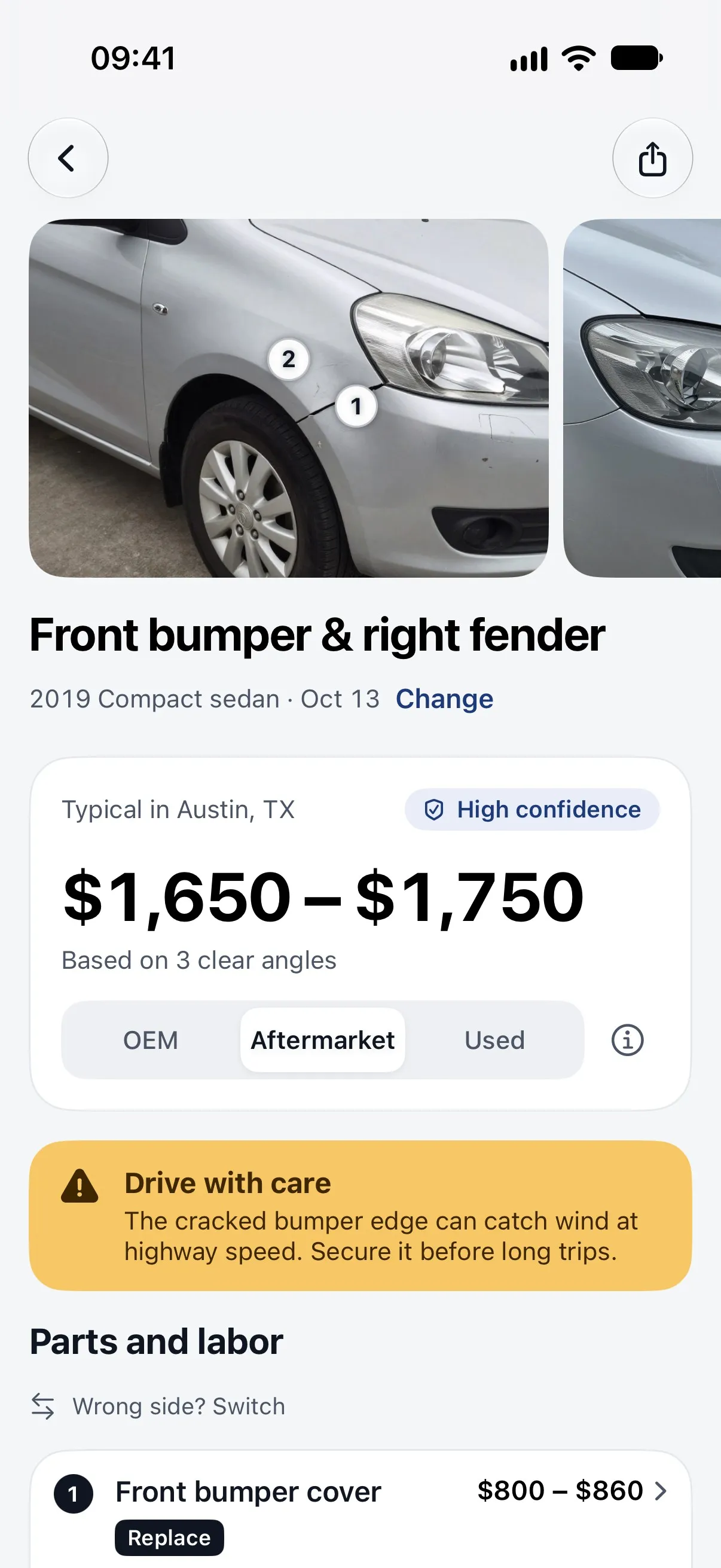
You can also take one to six photos of the damage and get a line-by-line estimate of parts, labor and paint with a typical range for your area, then compare it with the shop's estimate. It's an AI estimate for planning, not an insurance appraisal or a shop quote: the final price depends on an in-person inspection. A "high" mark is a comparison, not a judgment of the shop. Full access requires a weekly or yearly subscription.
Questions
How do you read an auto repair estimate?
Start with the header (VIN, trim, paint code), then read each line's operation code, part type and hours, then the paint and materials, sublet and totals. Circle anything unclear and ask the shop to explain it before you sign.
What does R&I mean on an estimate?
R&I means remove and install: the same part is taken off to reach the damage and put back on. It carries labor hours but no part price. R&R, remove and replace, means a new or used part goes on.
What is blend on a body shop estimate?
Blend means fading new paint into an undamaged neighboring panel so the color matches. It's billed as a share of that panel's refinish time, not as a full repaint.
What does A/M or LKQ mean on an estimate?
A/M means an aftermarket part made by a company other than the carmaker. LKQ means like kind and quality, which usually refers to a used part from a salvage vehicle.
What is a supplement on a repair estimate?
A supplement is an added estimate written after the car is taken apart and hidden damage is found. It lists only the new lines and often carries a number such as S01.
Sources
Prices on this page come from our reference dataset compiled October 12, 2026 from 834 source URLs. Older figures are shown with their year and not adjusted for inflation. All sources →
Related repair guides
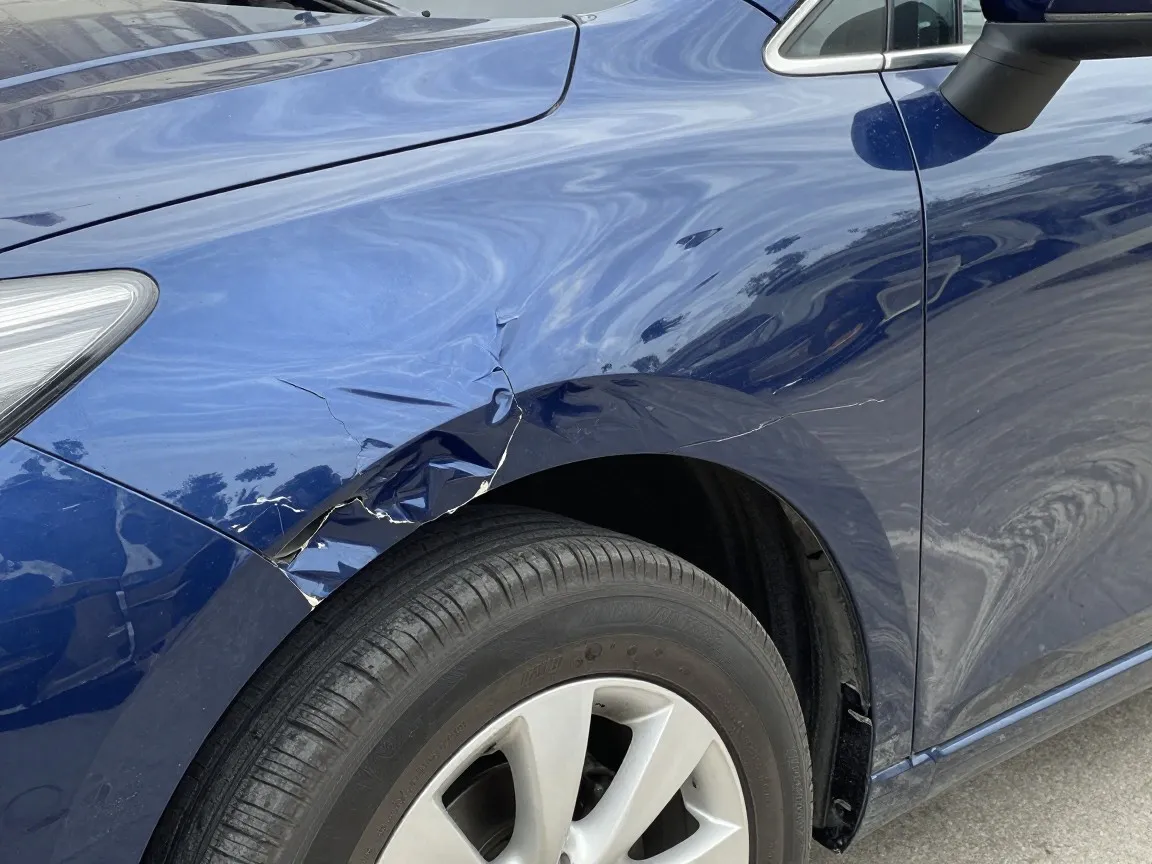
Price ranges built from 834 public sources and refreshed monthly. Your final price comes from the shop's written quote after inspection.

Know your repair cost before you go to the shop.
Take a photo of the damage and get a line-by-line estimate.